
 We have enjoyed looking at the Spring Trees here on the Central Oregon Coast. Moving here from the High Desert (where the spring green of leaves arrives sometime in May) has created curiosity and new interest in the budding flowering and towering trees. We have taken most of the month of April – bits at a time – to watch intently with purpose the transformation of Winter into Spring.
Is it just beginning to show leaves? Can you tell if your tree has all of its leaves yet? – The small shoots coming up from the hillside had leaves which we identified to be new fresh Red Alder shoots. The large towering Red Alders did not start to leaf out until near the end of the month. They are still in a very small leave stage, quite slower than the shoots that were fully leafed out the first week of April.
Can you see any insects or birds in your tree? We have not seen insects in the tree, but we have seen the Northern Flicker family merrily eating her meals there. The Red Alders are wrapped with Ivy, making it difficult to easily view the wild life. The trees are teaming – we know from the sounds and the darting movement. We are still trying to identify all of the birds in the tree. You can see our Northern Flicker on the Lake Blog.
Collect a few leaves to use for leaf rubbings in your nature journal. You could also make a leaf bouquet.Compare two leaves from the same tree. Are they exactly alike? Use your nature journal to record a sketch of the leaf and any blossoms.

We used a sponge to press the leaves into the ink, then a smooth jar to roll the leaf out. Jon REALLY liked this activity, he has quite a few pages of pictures created out of the leaves. We thought that the shoots were Elm, and then on further investigation in our Trees to Know in Oregon book written by the Oregon State University Extension Service ( a must have Book for any Oregon student, the link above is an online PDF of the book) we changed our mind and labeled the leaf Red Alder.

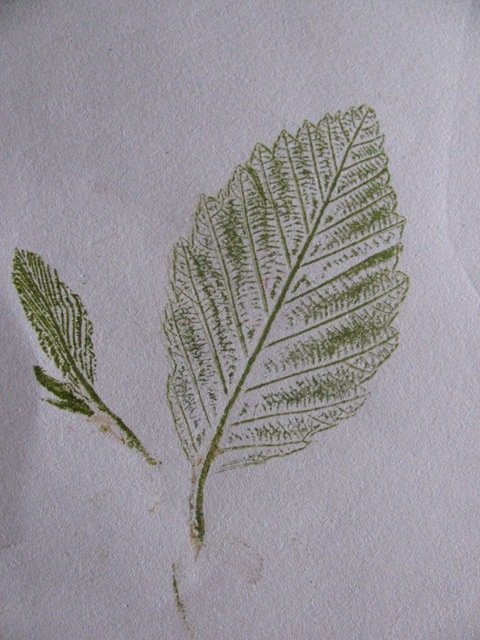
One evening I sent Jonny Lego out to get a leaf – before telling him that the project’s intention was to do a leaf rubbing, and he came back with a 79 cm Skunk Cabbage Leaf and really muddy shoes. 🙂


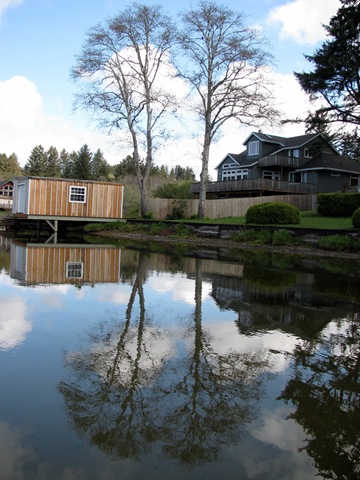
The photo below is of one of our neighbor’s houses, they have an eastern lawn on the lake. Love to see the Twisting and Turning and Mangling of this Alder trunk.
The wind off the ocean hits it straight on.


I kept taking the boys to the Connie Hansen Garden Conservatory to pick a “favorite tree” – they really were not into the “fancy”. They picked the Alder in the side yard, pictured at the top of this post. For the record, this has been mom’s favorite tree this month. 🙂
We have many plants to identify in the yard! Looking forward to great studies!
You too can do an Outdoor Nature Study on Spring Trees! 15 minutes outside with your kids could change how you see the trees in your neighborhood! Join us at the Handbook of Nature Study! She has a McLinky on her site to keep you inspired on how varied each study can be. 🙂


 +Angie Wright









 Pebblekeeper
Great photos!! I really like that first one with the tree reflection in the water 🙂
Saw your link on OHC 🙂
Oh my goodness, what a gigantic leaf! I’ve never seen one of those before.
Sakes! That is an enormous leaf! I love your nature journal leaf rubbings too. What a great idea to use the ink that way. We just might have to try that.
Though I am a Southern raised girl, I did live out west for four years. One of my favorite spots was the Oregon coast.
My son will be interested to come back and read about the northern flicker 🙂
That is some big leaf!
We have been watching our trees too and getting the feel for which ones have leaves first and which ones are a little slower. We are now in the tree pollinating stage and my allergies are wild. Oaks mostly but a few others are dropping pollen in yellow muddles on our deck. Why do trees have so much pollen?
I enjoyed your photos and your journals too. Thanks so much for sharing.