
Week #9 of the Spring Handbook of Nature Study is – Earthworms! One thing we are excited about in the garden here on the coast is the abundance of earthworms. We enjoy the excavating vigor and the attraction factor that Trout have for them at supper time. We have been digging them up and using them for bait. We learned that you can take a syringe or even a Worm Blower sold in stores – and blow air in them to help them float on top of the water. We used Trout Nectar and the Syringe to make them a wonderful treat. 🙂 Caught four 14-16 inch trout that afternoon. 🙂 <<Pics and Story Here>>
Since we have such a close relation to digging these critters up – I thought it would be fun to do the Worm Jar –
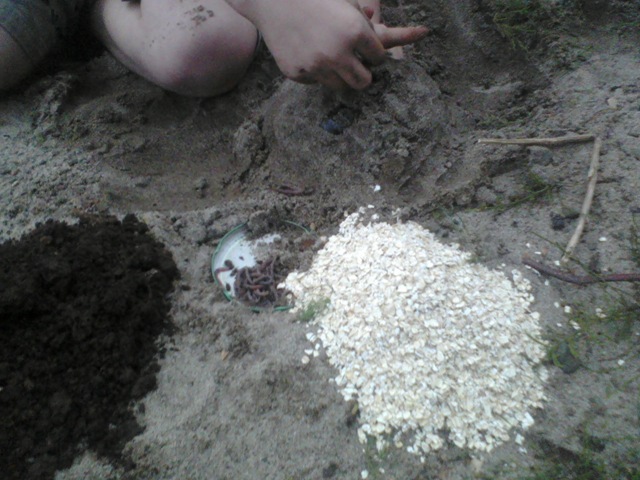
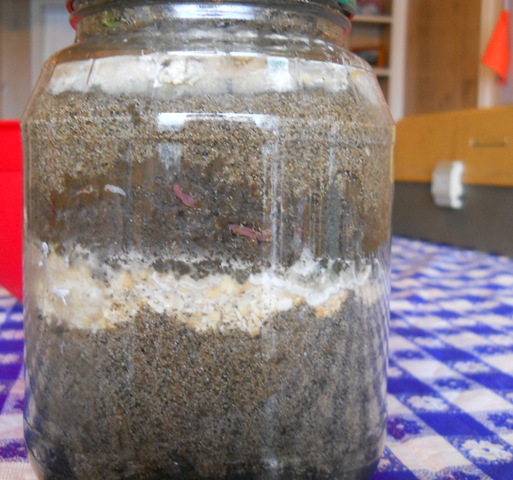
We used dirt from the garden, sand from the sand box and oatmeal from the cupboard. Plus the Invited Guests – 30 Worms from the garden.
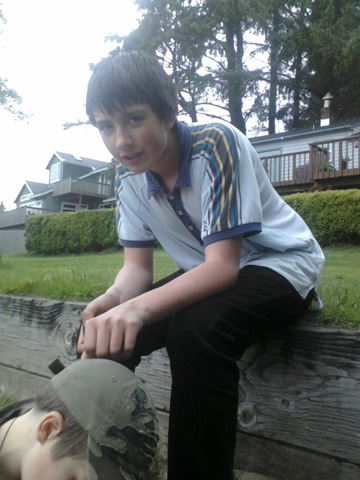
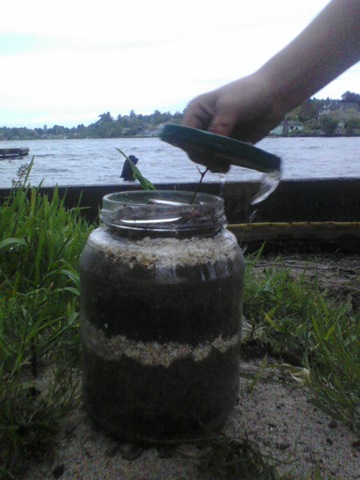
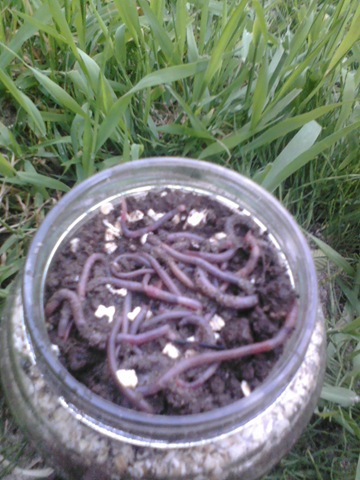
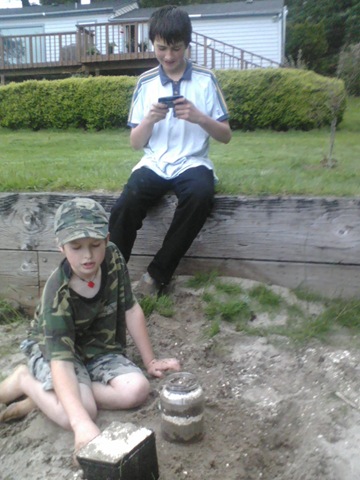
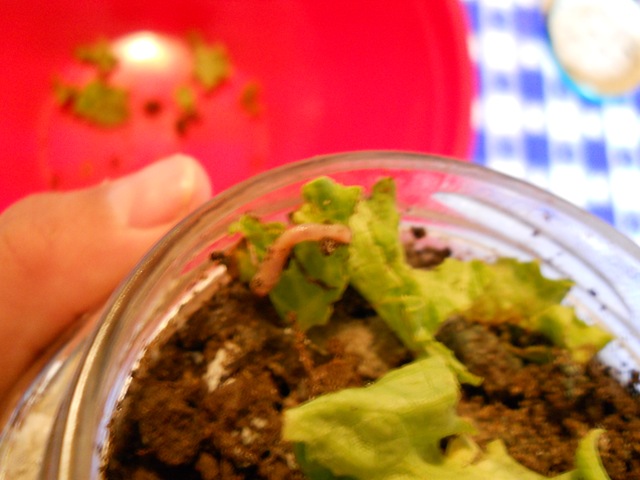
We sealed it up, and opened it today after three weeks. The worms were all still in the top layer of dirt. I think we put too much sand in the sand layer. 🙂 I had put lettuce in the top last week, and one worm was up nibbling.
We invited two families over to help us with our actual worm observations. We started with going through the slides from the Worm Study about Squirmy Hermie. Then we went out in the rain to quickly dig up the worms.
My favorite quote from Handbook of Nature Study is on page 424 –
“For the study of the individual worm and its movements, each pupil should have a worm with some earth upon his desk.”
The worm is one of the few studies that she encourages us to bring inside to observe. 🙂 Which is good because we were in a winterlike spring storm. 🙂
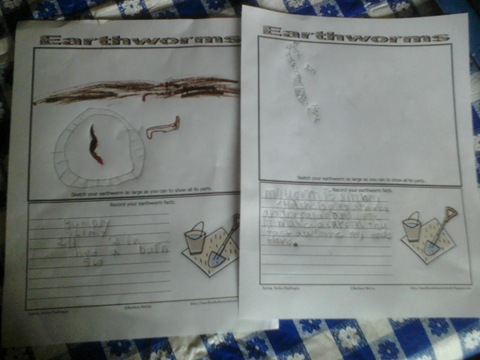
We put 1-2 worms in a cutoff sandwich bag with dirt. The kids got to dump the dirt – observe the worms in action, try to figure out which was the head and tail, determine how old/young they thought the worms were, and talk about how they moved. We measured them while stretched out, and while shrunk. Each child had a copy of the notebooking page to write out their observations.
We learned that worms have hair – we learned how to tell how old they are, and we learned how to tell which is the head and which is the tail. We also learned that they are nocturnal and that they eat at night up on top of the ground. The kids seem to have a greater appreciation for the worm’s composting skills as well.
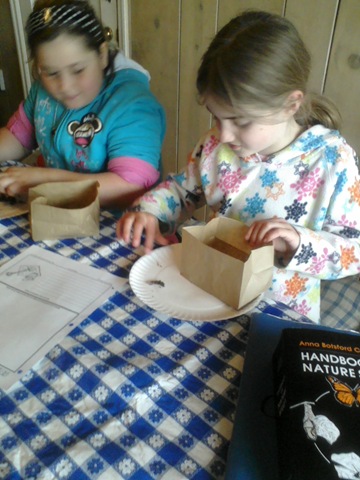
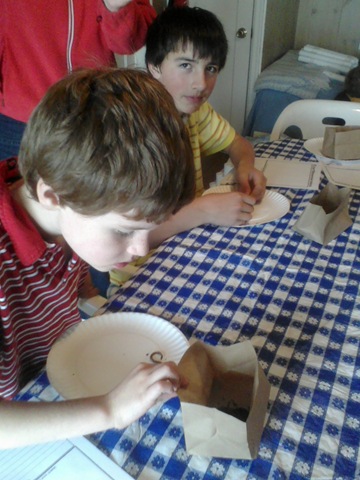
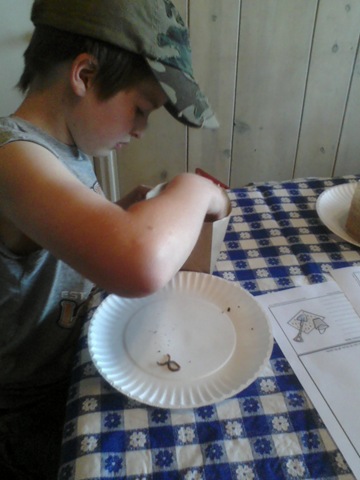
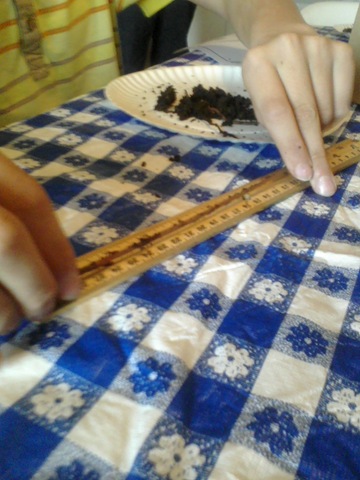
We were going to go back and do a bit more detailed sketching and writing – I had checked out books from the library to help with the worm parts – but the boys had lost interest in the “detail”. So – I think we will move on from the Spring Earthworm Study. 🙂


 +Angie Wright










Wow! I want to be at your gathering and study worms with you. 🙂
We have not done a jar but we are working on adding worms to our compost so our study will be ongoing as we watch and see by trial and error what we need to do to get them going in there.
I think that is what I took away from your entry. Even though the jar did not work out as you had planned, you learned something…too much sand. That is good science and I think my boys learn more when the experiments don’t go as they had expected. It always leads to more questions.
Great study and love the notebook pages. Maybe in the future you can do this again, perhaps connected to a biology study in high school and I’m sure your boys will remember this experience and build on it.
Thanks for the link.